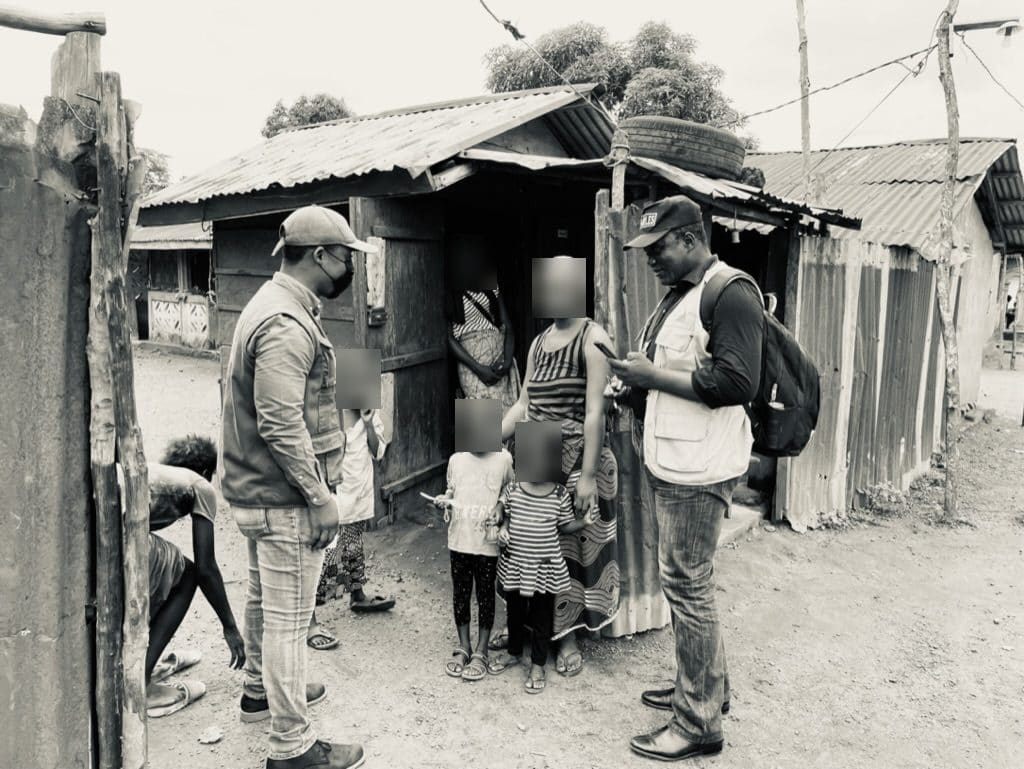
 Community engagement during the measles outbreak response, Kambia District, Sierra Leone. Faces of minors have been obscured.
On the evening of 5 November 2021, a loaded fuel tanker collided with a lorry carrying granite at PMD Junction in Wellington, on the eastern edge of Freetown.
The tanker did not explode immediately. It leaked.
That gap — between the collision and the fire — is the part of the story that stays with me. In that window, people came. They came with jerricans and buckets and whatever containers were to hand, because in Wellington a stream of free petrol is not a hazard, it is a windfall. Some carried it into makeshift structures nearby. Then, for reasons never conclusively established, it ignited.
By the time the count closed, 154 people were dead. Eighty-seven died at the scene. Sixty-seven died while receiving facility care. More than three hundred people were injured.
I was deployed to Sierra Leone by the Africa Centres for Disease Control and Prevention as Field Coordinator and Head of Mission, working alongside the Ministry of Health and Sanitation’s Public Health National Emergency Operations Centre. That night, my job was to help stand up the incident coordination centre.
What the work actually looked like
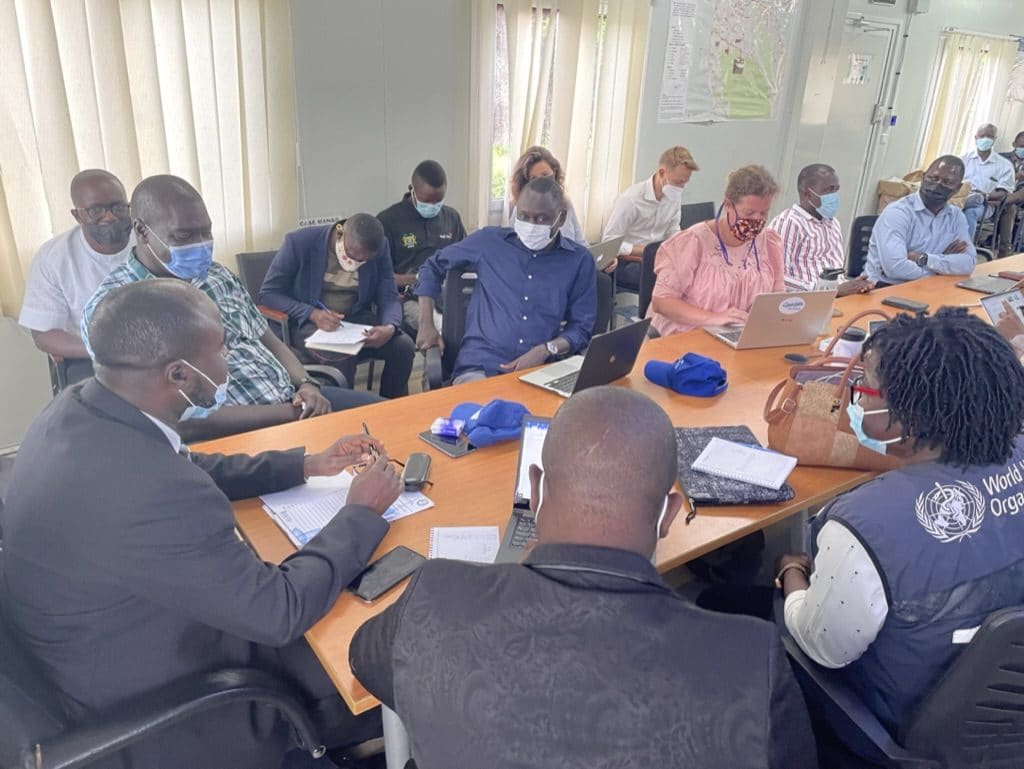 Partner coordination meeting, Freetown.
There is a version of emergency response that appears in photographs: the convoy, the tent, the high-visibility vest. It is real, and it matters, and it is roughly ten percent of the job.
The other ninety percent, in the first seventy-two hours after Wellington, looked like this.
Someone had to establish a single line list, because three hospitals were counting differently and no one could say with confidence how many patients were in the system. Someone had to build the daily reporting rhythm — a situation room that monitored health outcomes, not just at the moment of impact but over the following weeks as burn patients who survived the first night did not survive the second. Someone had to hold the distinction between “died at the scene” and “died in facility care,” because those two numbers point to entirely different failures and entirely different fixes.
That distinction — 87 and 67 — is not accounting. It is the difference between a mass-casualty scene-management problem and a burns-care capacity problem. A country that only records “154 dead” learns nothing. A country that records both learns two things.
This is what an incident management system is for. Not command for its own sake, but the discipline of asking the boring question at 2am and writing down the answer in a form somebody can act on tomorrow.
The pathogen changes. The system does not.
I served in Sierra Leone from April 2021 to September 2022. In that period, the country worked through multiple COVID-19 waves, including the Omicron-driven fourth wave; a measles outbreak; Lassa fever; anthrax; vaccine-derived poliovirus; Ebola preparedness triggered by reports across the Guinea border; and Marburg preparedness. And a fuel tanker explosion.
I did not expect that list to include an industrial accident. That is precisely the point.
The instinct in global health is to organise around the threat: a COVID team, a measles campaign, a cholera plan. It is an understandable instinct and a limited one, because the country does not get a memo about which emergency is coming next. What Sierra Leone needed at Wellington was not a fire plan. It was a functioning emergency operations centre, a hotline that worked, a surveillance architecture that could pivot, and people who had rehearsed working together before the night they had to.
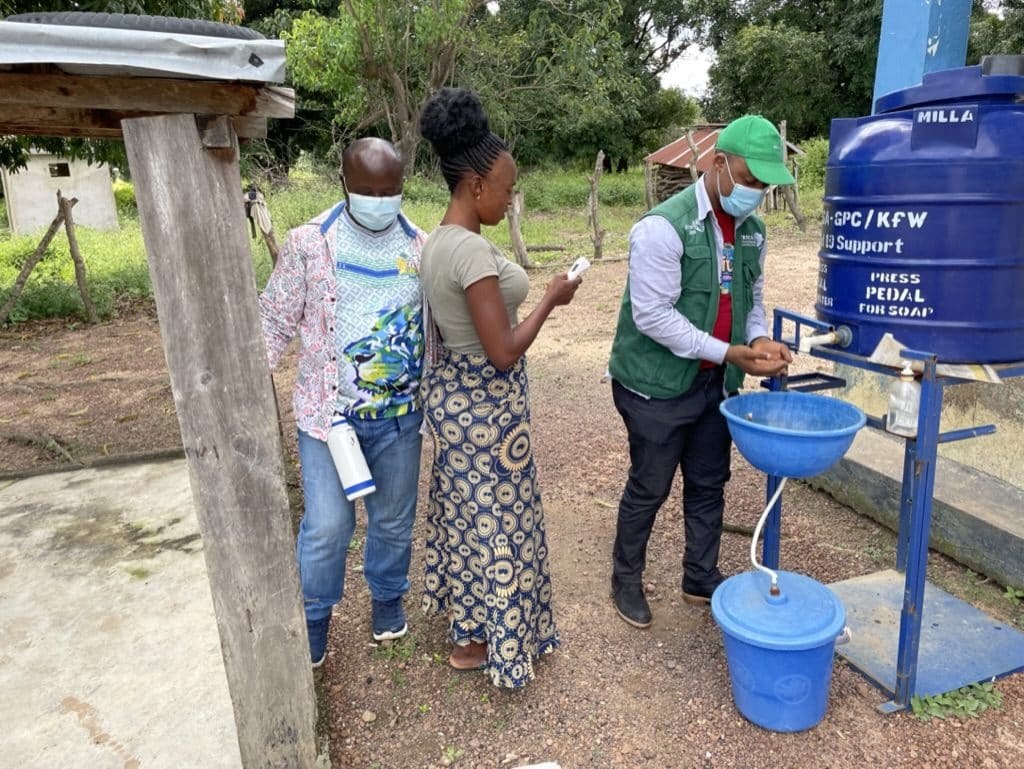 Supportive supervision at a border health post, Sierra Leone.
The 117 call centre and media scanning that we had been strengthening for epidemic intelligence — for COVID-19, measles, Lassa — carried the Wellington response too. Event-based surveillance is built to detect signals of any kind. That is not an accident of design; it is the design.
What outlasts a deployment
Somewhere in the middle of my time in Freetown, my understanding of the work changed.
I had arrived thinking of myself as a responder. I left thinking of myself as someone whose job was to make the next response possible without me.
The measles work is the cleanest illustration. Rather than simply supporting a campaign, we ran a case-control study across the eight affected districts. It identified lack of vaccination as the risk factor associated with the outbreak. That finding — not an assumption, a finding — informed the reactive vaccination campaign carried out nationally in June 2022. The evidence outlived the outbreak and it will inform the next one.
The same logic applied to the documents. Over that deployment I contributed to Sierra Leone’s National Public Health Emergency Operations Plan, the National One Health Policy, and the National Public Health Personnel Deployment Plan. We worked with Liberia to harmonise cross-border protocols and minimum requirements for priority diseases, developed new traveller screening procedures, and trained health workers at points of entry and ground crossings.
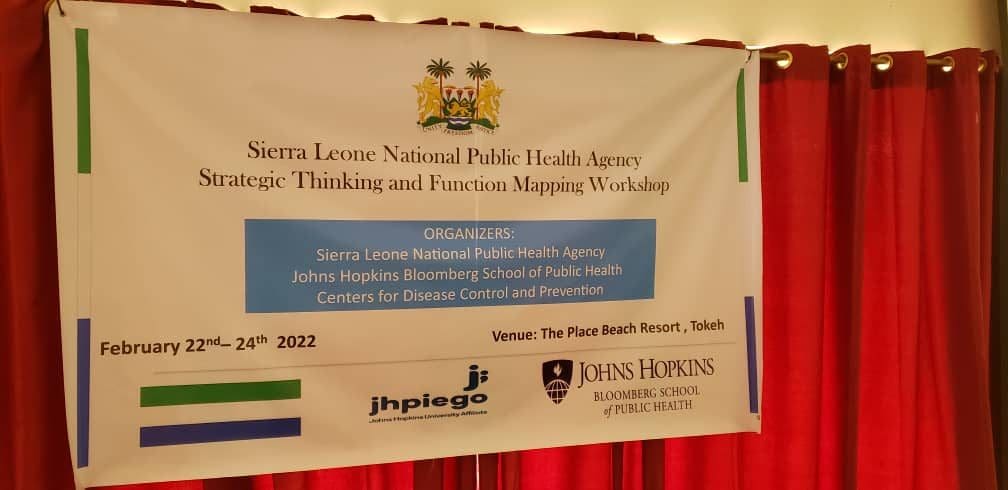 Sierra Leone National Public Health Agency Strategic Thinking and Function Mapping Workshop, February 2022.
None of that is photogenic. A personnel deployment plan does not trend. But a personnel deployment plan is the reason that, the next time something happens at 8pm on a Friday, somebody knows who is authorised to move, where they are going, and who pays for the fuel.
The limits worth naming
I would be misrepresenting the deployment if I described only what worked.
We operated for long stretches without inclusion in the communication chain between the Africa CDC secretariat and the Member State. Requests for guidance on next steps sometimes went unanswered long enough to matter. There were no deployment kits or identification cards, no official email addresses, no dedicated budget line to implement the workplans we had written, and no vehicles of our own. We raised these formally, and I still raise them, because a rapid response programme without logistics is a set of very well-qualified people waiting for a ride.
I say this not as a complaint but as a design note. The gap between what deployed technical staff are asked to deliver and what they are equipped to deliver is one of the most consequential and least discussed problems in continental health security. It is fixable, and it is cheaper to fix than the emergencies it delays.
Why this still shapes my work
The New Public Health Order that Africa CDC advances is often discussed at the level of institutions and treaties. It is also, concretely, this: a country’s ability to absorb an unexpected shock without the response having to be invented from scratch each time.
Wellington was not an outbreak. It was a Friday evening, a collision, and a crowd of people doing something entirely rational given their circumstances. What determined the outcome was not epidemiology. It was whether the systems built in the quiet months could hold.
We do not get to choose which emergency arrives. We only get to choose what we built before it did.